Dit is deel 6 van onze serie over hoe Gylder werkt. In het vorige bericht behandelden we de portefeuilleverdeling. Nu kijken we naar de grafiek die alles samenbrengt: je vermogensgeschiedenis.
Meer dan alleen het getal van vandaag
Je huidige vermogen kennen is nuttig. Maar weten hoe het in de loop der tijd is veranderd is veel krachtiger. Een vlakke lijn vertelt een ander verhaal dan een gestage stijging. Een plotselinge daling vraagt om onderzoek. Een geleidelijke groei bevestigt dat je strategie werkt.
Gylder bouwt een historische grafiek van je vermogen — en die begint niet op de dag dat je je aanmeldde.
Dagelijkse snapshots
Elke dag maakt Gylder een snapshot van het saldo van elke gekoppelde rekening. Deze per-rekening snapshots worden individueel opgeslagen, zodat je historische data gedetailleerd en nauwkeurig is.
Wanneer je je vermogensgrafiek bekijkt, telt Gylder de snapshots van al je huidige actieve rekeningen op voor elke datum. Dit betekent:
- Een rekening toevoegen breidt je geschiedenis uit tot wanneer die rekening werd gekoppeld
- Een rekening ontkoppelen verwijdert deze van elke historische datum — je grafiek weerspiegelt altijd de rekeningen die je nu hebt
- De waarde van vandaag wordt altijd live berekend uit je huidige saldi, zodat het eindpunt van de grafiek overeenkomt met je dashboard
Historische reconstructie
Voor crypto-exchanges gaat Gylder verder. Wanneer je een exchange koppelt, importeren we je volledige handelsgeschiedenis — elke koop, verkoop, storting en opname. Met deze data kunnen we reconstrueren wat je bezittingen waren op elke willekeurige dag in het verleden.
Gecombineerd met historische prijsdata van de exchanges betekent dit dat je cryptoportefeuillewaarde nauwkeurig wordt weergegeven tot aan je allereerste transactie. Je verliest geen maanden of jaren aan geschiedenis alleen omdat je je vandaag aanmeldt.
Voor bankrekeningen begint historische data vanaf het moment dat je koppelt — we ontvangen je huidige saldo en transacties tot een beperkte periode terug (doorgaans 90 dagen, afhankelijk van je bank).
Tijdsperiodes
De grafiek ondersteunt meerdere periodes:
- 1W — De afgelopen zeven dagen, met dagelijkse detail
- 1M — De afgelopen maand
- 3M — Het afgelopen kwartaal
- 1J — Het afgelopen jaar
- Alles — Alles sinds je vroegste datapunt
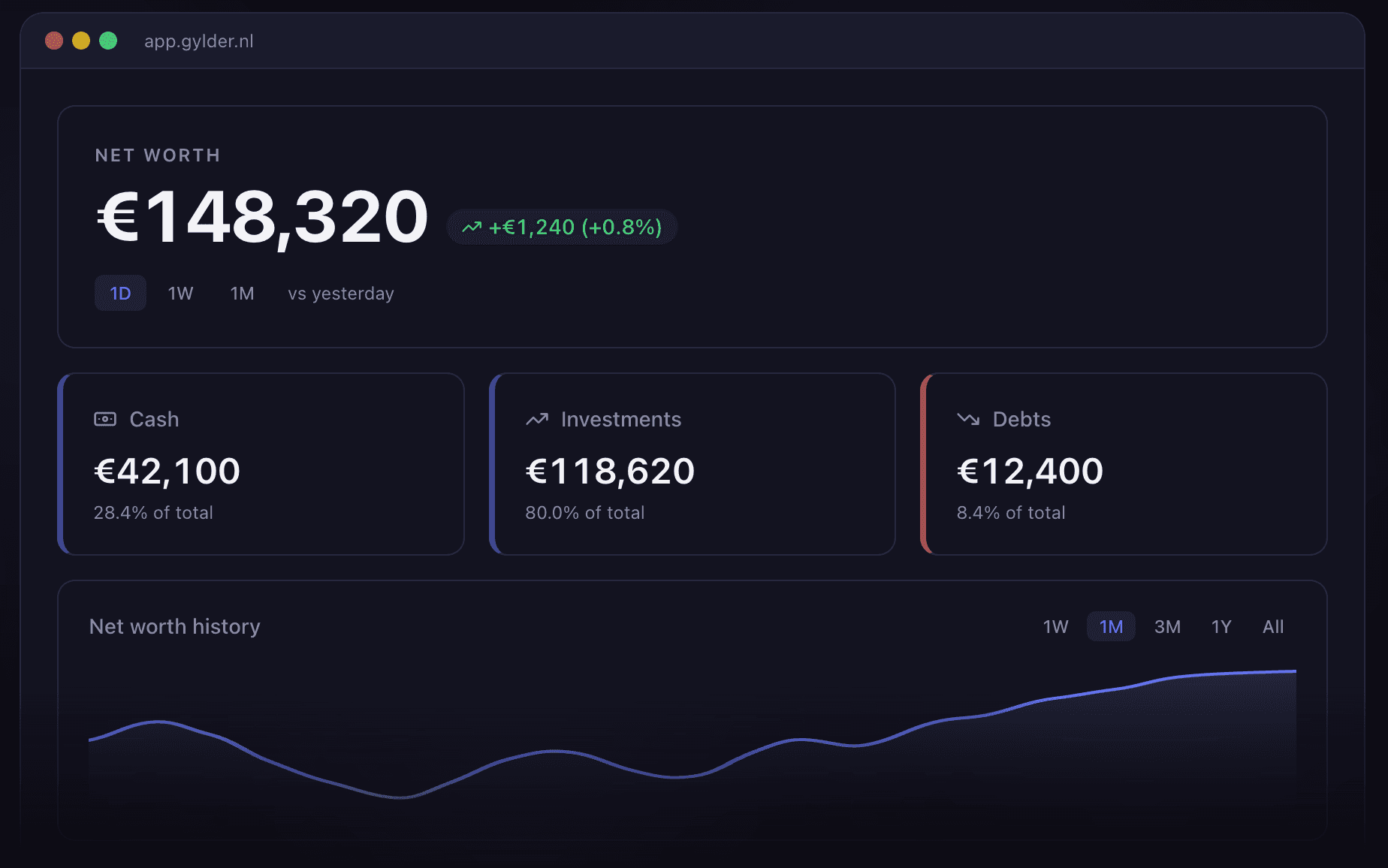
Elke weergave toont de absolute verandering en procentuele verandering voor de geselecteerde periode, waardoor het eenvoudig is om te zien hoe je vermogen is gegroeid (of gedaald) over elk tijdsbestek.
Handmatige invoeren in de grafiek
Handmatige invoeren — zoals vastgoed, voertuigen en schulden — worden in de grafiek opgenomen tegen hun huidige waarde voor elke historische datum. Aangezien deze geen dagelijkse prijsschommelingen hebben, verschijnen ze als een stabiele basislijn waar je andere, meer volatiele bezittingen omheen bewegen.
Dit is een bewuste ontwerpkeuze: je huis veranderde niet elke dag van waarde, dus de grafiek moet niet doen alsof dat wel zo was. Als je de waarde van een handmatige invoer bijwerkt, geldt de nieuwe waarde vanaf dat moment.
Waarom dit belangrijk is
De meeste vermogenstrackers beginnen op nul op de dag dat je je aanmeldt. Dat betekent dat je alle historische context verliest. Je kunt dit kwartaal niet vergelijken met vorig kwartaal. Je kunt de impact van een beslissing van zes maanden geleden niet zien.
Gylder's aanpak geeft je een betekenisvolle grafiek vanaf dag één — omdat je financiële geschiedenis niet begon toen je een account aanmaakte.