This is part 5 of our series on how Gylder works. In the previous post, we covered manual entries. Now let's look at how Gylder organises everything into a portfolio you can actually understand.
From raw data to clear categories
Once you've connected your accounts and added manual entries, Gylder has a lot of data: bank balances, stock positions, crypto holdings, property values, and debts. Showing all of this as a flat list would be overwhelming.
Instead, Gylder groups your wealth into buckets:
- Cash — Bank balances and physical cash
- Investments — Stocks, ETFs, bonds, funds, and broker positions
- Crypto — All cryptocurrency holdings across exchanges
- Debts — Mortgages, loans, and other liabilities
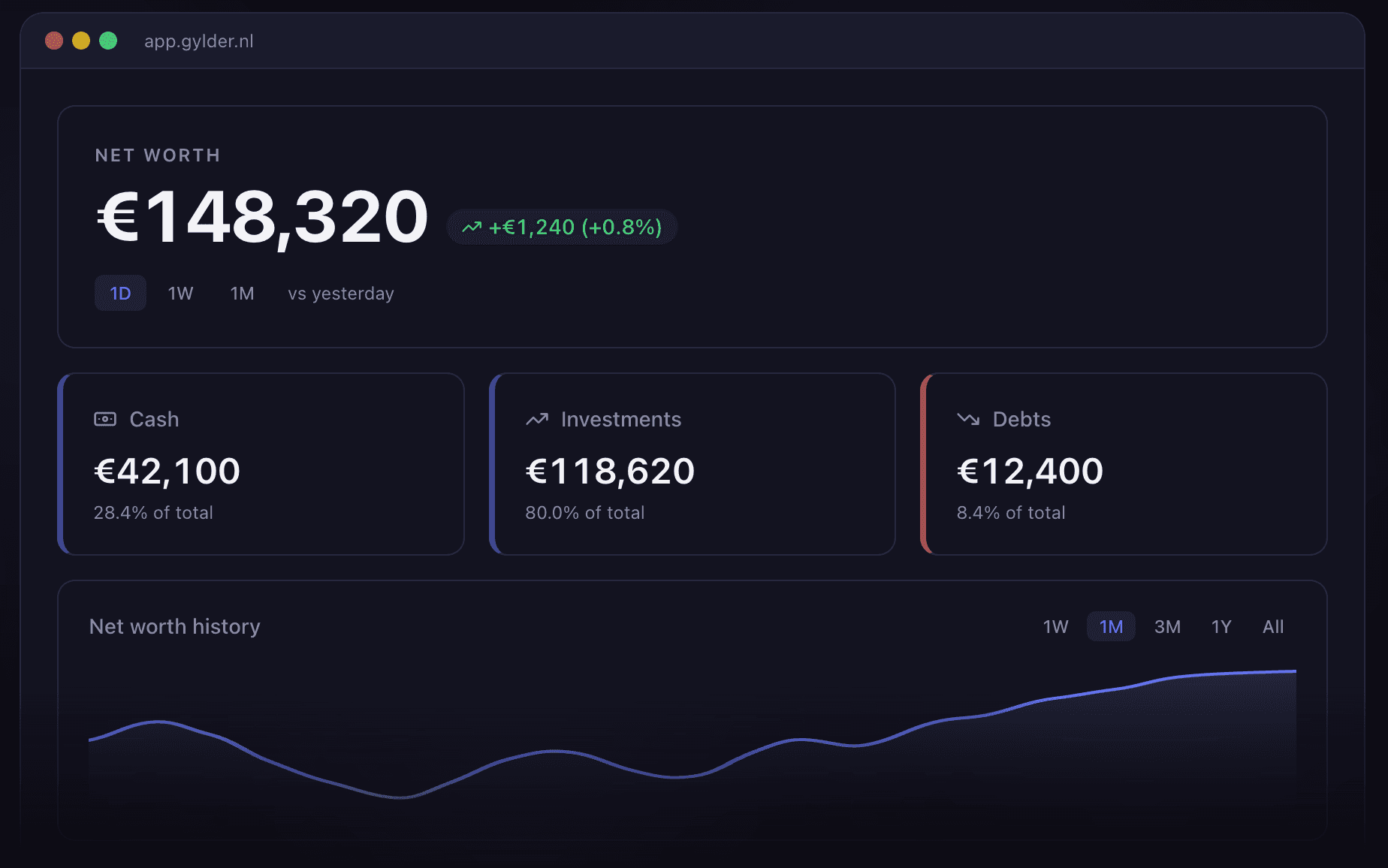
Your dashboard shows each bucket as a card with the total value and its percentage of your overall portfolio.
Drilling into the details
Tap on any bucket to see what's inside. The investments bucket, for example, shows every individual position — each ETF, each stock, each crypto coin — sorted by value.
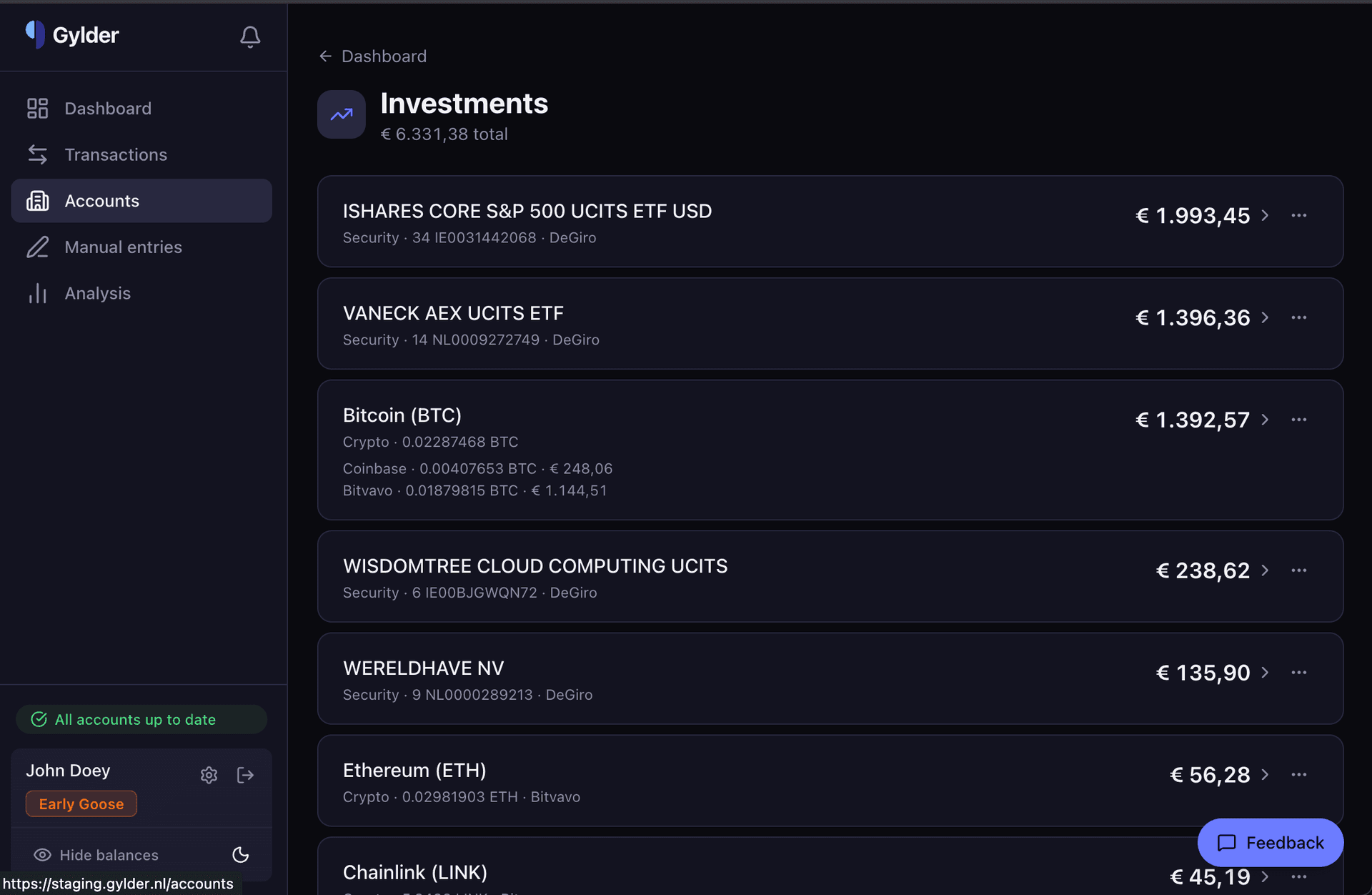
For crypto held across multiple exchanges, Gylder merges them into a single line with a sub-breakdown. Your Bitcoin shows as one combined holding, with the amount on each exchange listed underneath.
Why asset allocation matters
Knowing your total net worth is valuable. Knowing where that wealth sits is even more valuable.
Asset allocation tells you:
- How diversified you are — Is 80% of your wealth in a single asset class?
- Where your risk is concentrated — Crypto is volatile; cash is stable. What's your mix?
- Whether you need to rebalance — If crypto surges and suddenly makes up 50% of your portfolio, that might be more risk than you intended
Most people have a rough sense of their allocation, but the actual numbers are often surprising. Seeing them clearly — with exact percentages — helps you make informed decisions.
The debt perspective
The debts bucket isn't just a number. For each liability, Gylder shows:
- The outstanding balance
- The lender or institution
- Your monthly payment
- An estimated payoff date (calculated from the balance and monthly payment)
This makes it easy to compare debts, prioritise repayment, and see how paying off a loan will impact your net worth over time.
Everything in context
The power of the portfolio view is context. A €1,400 Bitcoin position feels different when you see it's 1% of your total wealth versus 40%. A €12,000 debt feels different when you know your total net worth is €148,000.
This context is what turns raw numbers into actionable insight — and it's only possible because Gylder brings all your accounts together in one place.